
JOURNAL / PLACE
A coastline
changes the frame.
Notes on distance, perspective and the Pacific.
At street level.
A coastline is experienced in fragments. A path, a stairway, a pier, a line of buildings. Each offers a different relationship to the water. Familiarity can make these fragments feel complete, even when they are only one way of seeing the place.
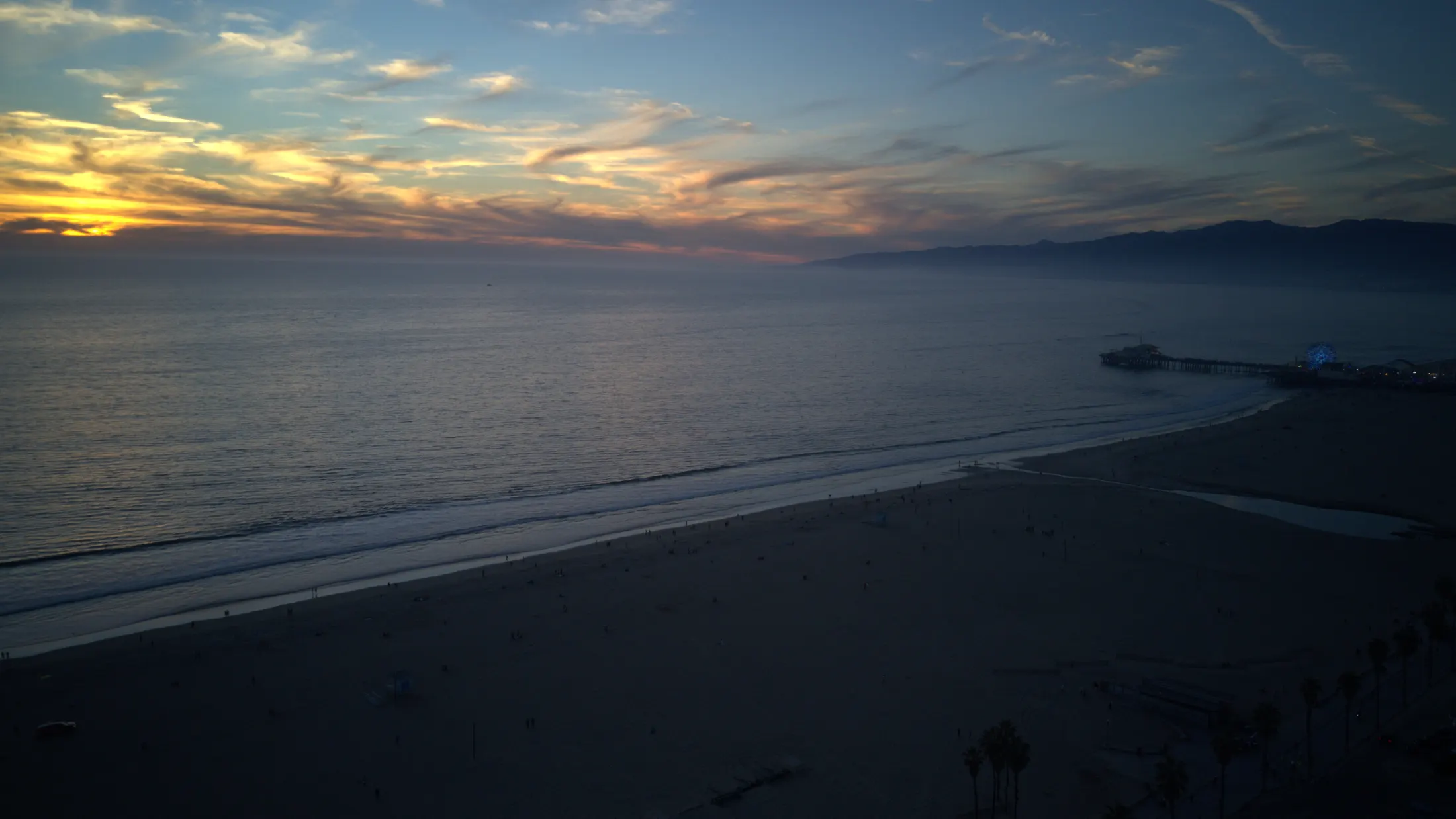
From above, those relationships shift. Streets meet the beach. The pier becomes a gesture across the water. Individual details remain, but a larger structure becomes visible.
Distance reveals relationships.
Our aerial photographs are a record of that change in perspective. They hold patterns that a close view can conceal: the meeting of natural and built forms, the scale of open space, the way movement gathers around an edge.
Distance also leaves things out. It cannot tell us what someone on the beach is thinking or why they came there. A wider frame and a closer encounter answer different questions. A thoughtful account needs room for both.
Let the photograph breathe.
A photograph has its own composition. Its edges, proportions and quiet areas are part of how it works. Giving the full frame room to breathe lets viewers discover relationships at their own pace.
That is the approach behind the coastal imagery on this site. The photographs are part of our own library, presented as a sense of place and a way of looking.
A point of departure.
Santa Monica gives Ocean Edgewater a place from which to begin. The larger invitation is to stay curious about the world beyond the familiar view: to change distance, ask another question and notice what the new frame reveals.
CONTINUE THE CONVERSATION
An idea worth exploring.